
Progressive Tax System Explained
Progressive tax system. Contributions. Credits. Deductions. Tax Strategy

Roadmap to actual tax owed

Every year is tax season and this season brings a flood of confusing terms like “Adjusted Gross Income” and “Modified Gross Income.” With legislative bodies constantly updating what is often called the most complex set of rules in existence, is no wonder why many of us feel lost. However, for most taxpayers, the path from your paycheck to your final tax bill follows a very consistent equation:
Understanding your taxes is easier when seen as a three-step subtraction problem. The Tax Equation:
Step A. Gross Income - (Deductions/Adjustments OR itemization) = Taxable Income
Step B. Taxable Income*Tax Rate = Tax Liability
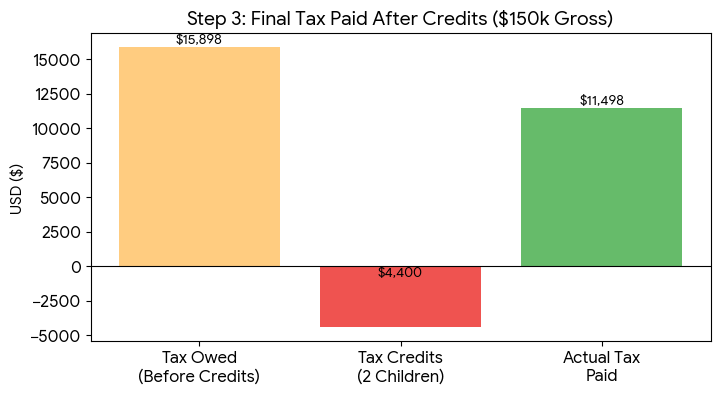
Step C. Tax Liability - Credits = Actual Tax Owed
Should you itemize or take the standard deduction?
Approximately 90% of taxpayers claim the standard deduction. You should only itemize if your expenses such as mortgage interest, charitable contributions or significant medical expenses - add up to more than the standard deduction amount.
Understanding the Progressive Tax System
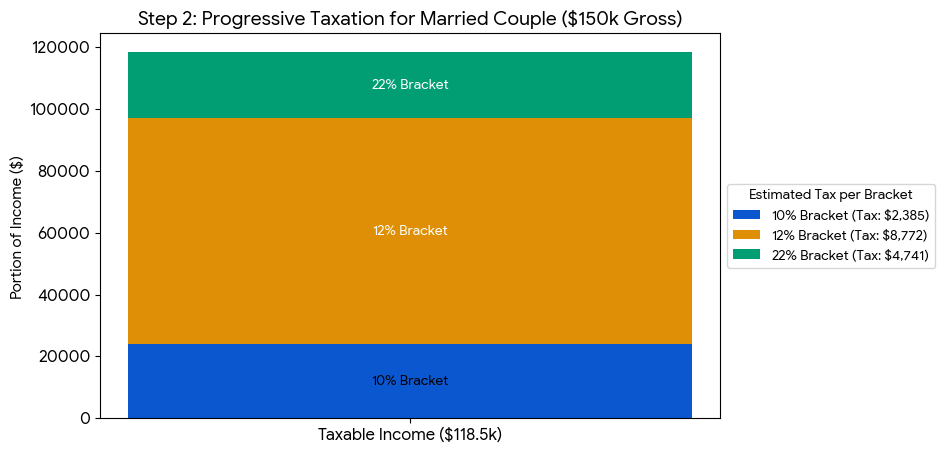
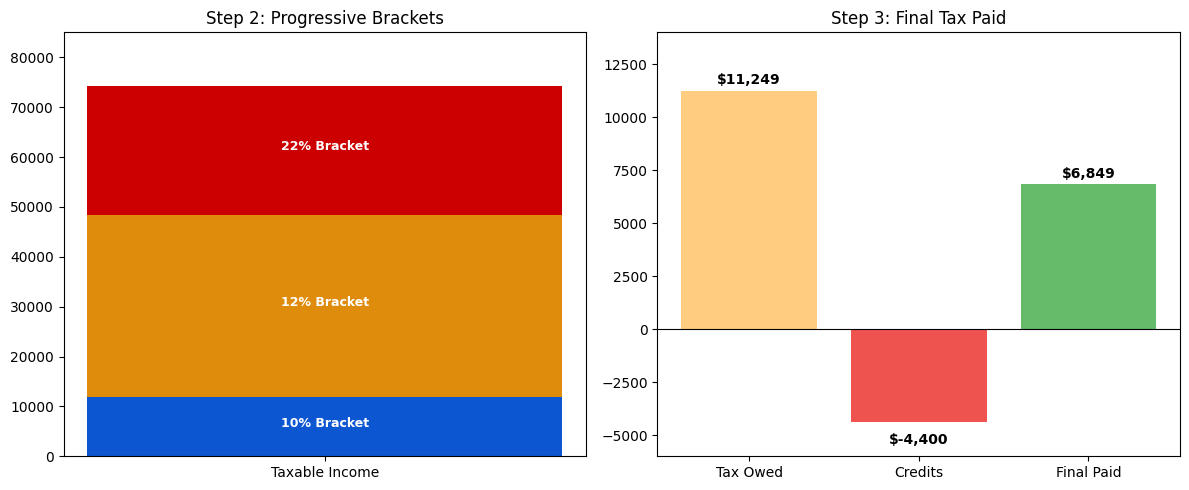
A common myth is that you pay one flat percentage on your entire income. In reality, we use a Progressive Tax System. This means different “chunks” of your income are taxed at different rates as you move up or down the brackets.
Case Study: Single Filer vs.Married Filing Jointly
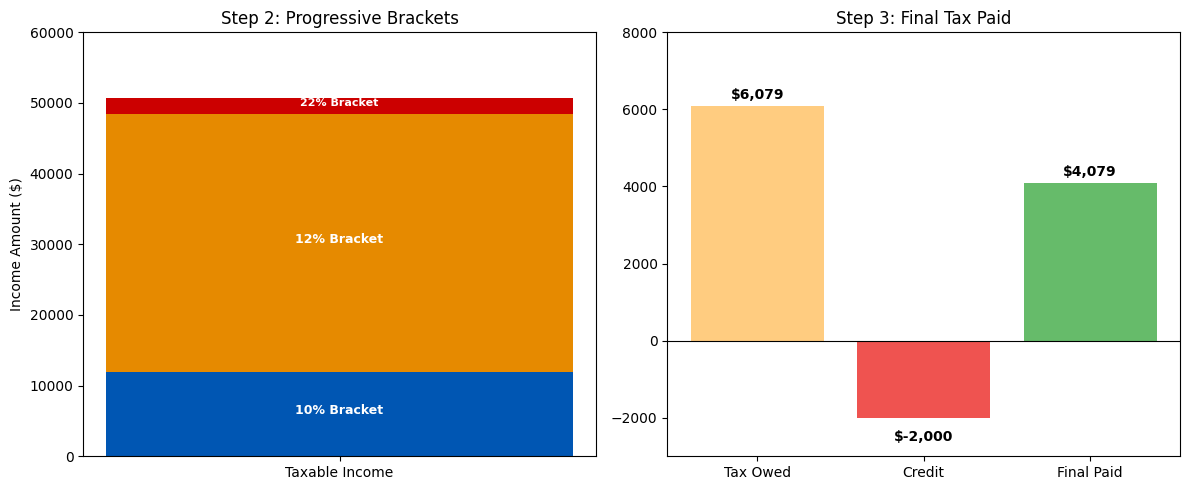
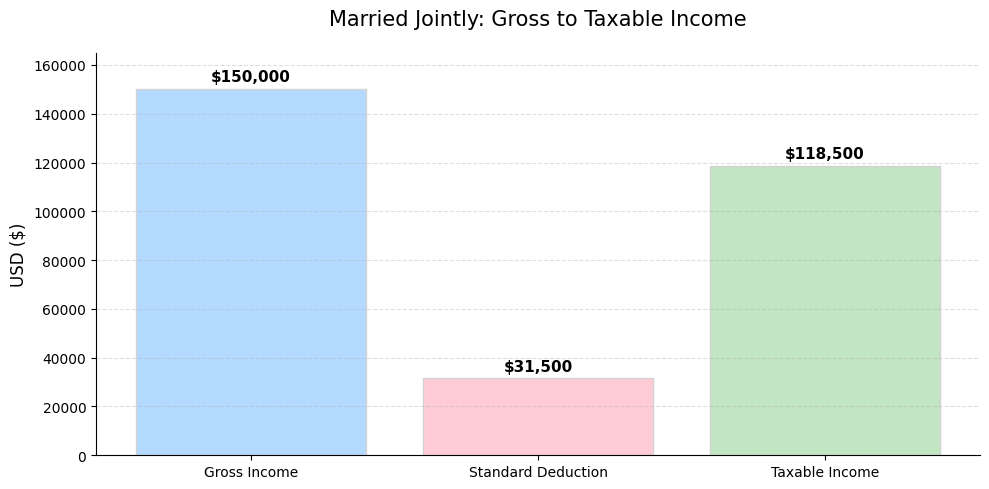
Visualizing these brackets can make the system much clearer. Whether you are filing as a single individual or married filing jointly, the strategy remains the same. Find your taxable income first , then apply the progressive rates.
Single Filer:
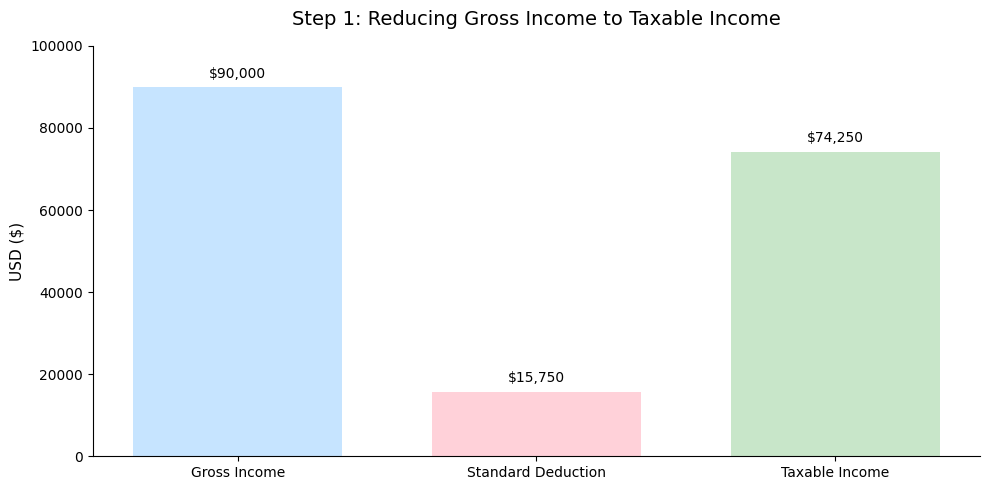
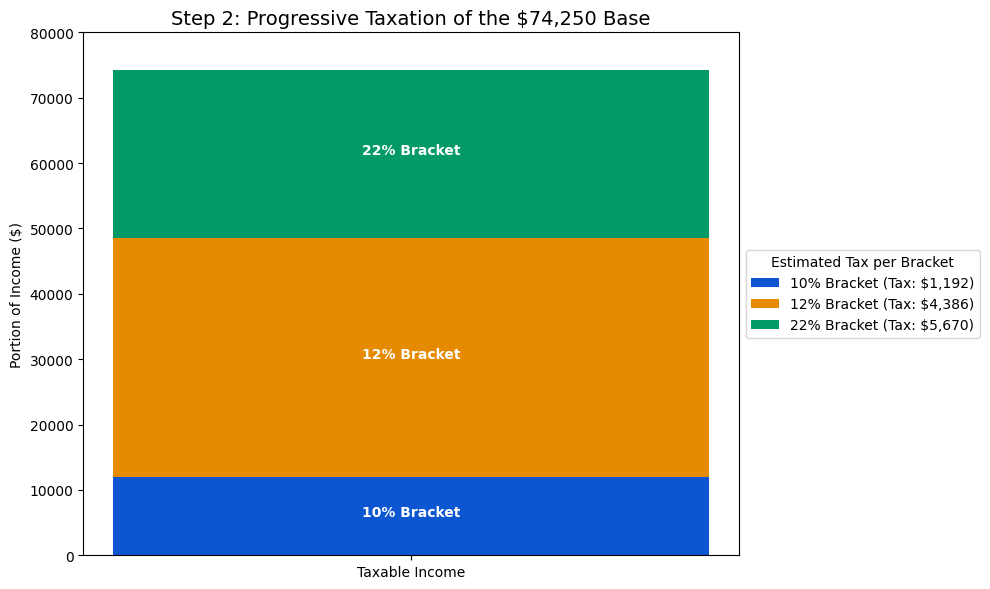
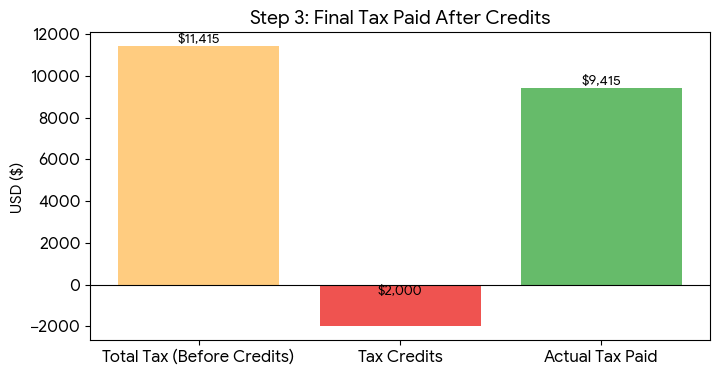
Single Filer: Pre-tax contributions to employer-sponsored 401(k) retirement account
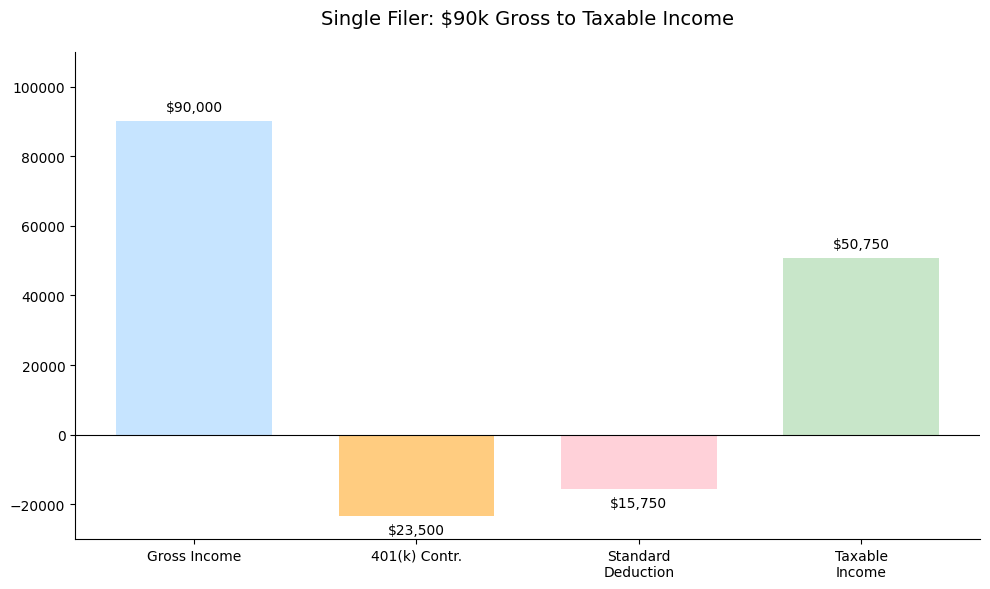
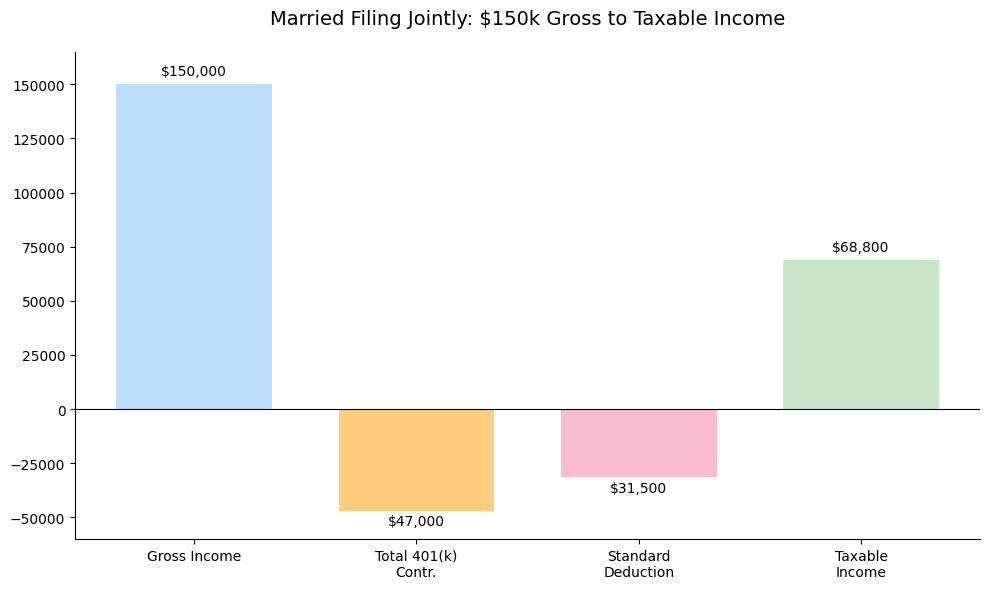
Married Filing Jointly:
Married Filing Jointly: Pre-tax contributions to employer-sponsored 401(k) retirement account
The Power of Tax Strategies
As seen in the illustrations, contributing pre-tax dollars to employer-sponsored accounts can significantly lower your final tax bill. By lowering your taxable base, you aren’t just saving for the future; you are keeping more of your money today.
Final Thoughts
Retirement contributions like a traditional 401(k) or IRA, are powerful tools because they reduce your “Gross Income” right at the start of the equation, often placing you in a lower tax bracket.The laws are voluminous, but the strategy is simple, maximize your contributions, deductions and credits to minimize your tax liability.
Disclaimer: I am a financial enthusiast who loves optimizing my understanding of the tax sector, but I am not a tax expert.